



Kerassentials is marketed as an eight-ingredient oil for nails and skin. Our ingredient review asks not only what is present, but how directly available research applies to the finished oil and to nail fungus specifically.
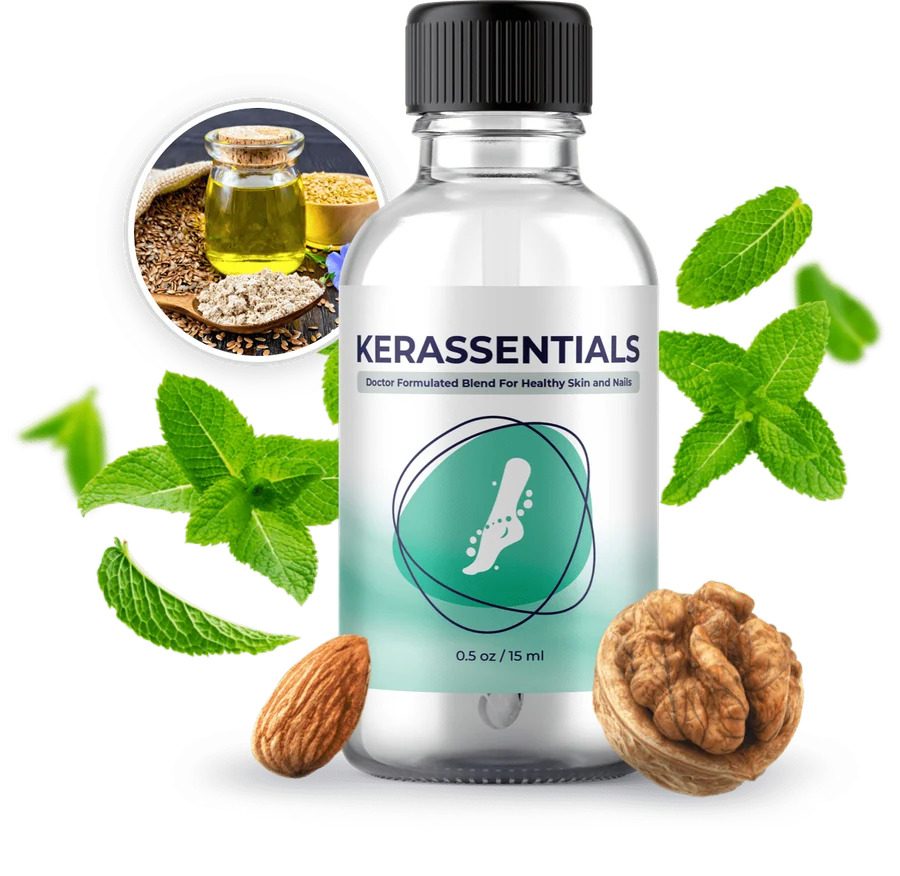
Kerassentials Nail & Skin Oil (0.5 oz / 15 ml)
Product image is displayed for identification. Seller claims and clinical evidence are evaluated separately throughout this site.
View Current Seller OfferOur rule: the strength of a conclusion should not exceed the strength of the evidence supporting it.
Ingredients Disclosed by the Seller
| Ingredient | Role | Best evidence we found | Nail-fungus relevance |
|---|---|---|---|
| Undecylenic acid | Antifungal fatty acid | Recognized OTC skin antifungal (U.S. monograph) | OTC rules: not effective on nails |
| Tea tree oil | Essential oil | Small randomized nail trials | Low cure rates; limited data |
| Lavender oil | Essential oil | Laboratory antifungal studies | No nail trials identified |
| Lemongrass oil | Essential oil | Laboratory antifungal studies | No nail trials identified |
| Almond, flaxseed oils | Carrier oils | Skin moisturization | Supportive, not antifungal |
| Aloe vera | Soothing botanical | Skin-care use | Supportive |
| Tocopheryl acetate | Vitamin E (antioxidant) | Skin-care use | Supportive |
Why an Ingredient List Is Not an Evidence Score
The sales page names the ingredients but not their concentrations. For antifungals, concentration is essential: OTC undecylenic acid products are regulated at defined strengths, and tea tree oil trials used 100% oil or 5% creams. Without a percentage, a buyer cannot compare Kerassentials with those studies.
Undecylenic Acid
Undecylenic acid is one of the antifungal actives permitted in U.S. over-the-counter products for athlete’s foot, jock itch and ringworm. The same regulation requires those products to warn that they are not effective on the scalp or nails, because the nail plate is a strong barrier and the fungus lives underneath it.
Tea Tree Oil
A 1994 randomized trial in 117 people with toenail fungus found 100% tea tree oil performed similarly to 1% clotrimazole solution over six months, with low full-cure rates in both groups. A small trial of a cream combining tea tree oil with the antifungal drug butenafine reported better results, but that tested a drug combination.
Read our tea tree oil evidence deep dive →
Lavender and Lemongrass Oils
Both show antifungal activity against dermatophytes in laboratory studies. Laboratory activity is a reason to research an ingredient, not evidence that it penetrates a thickened toenail in people.
Carrier Oils, Aloe and Vitamin E
Almond and flaxseed oils, aloe and vitamin E can soften and moisturize skin and cuticles, which may improve the look of dry nails. They are not established antifungal treatments.
Formula Transparency
We recommend asking the seller for the full ingredient percentages, especially for undecylenic acid and tea tree oil, before buying.
Our Conclusion
Kerassentials has a reasonable skin-care logic and two ingredients with recognized antifungal activity on skin. The defensible conclusion is ingredient-level plausibility, not proof that the oil cures nail fungus.
Sources & References
We prioritize primary product information, regulatory sources, peer-reviewed research and recognized clinical guidance. Seller claims are not treated as independent clinical evidence.
- Current Kerassentials seller page (kerassentials.com)
- U.S. eCFR 21 CFR 333 Subpart C: Topical antifungal drug products (OTC)
- Buck DS et al. Tea tree oil vs 1% clotrimazole for toenail onychomycosis, J Fam Pract 1994 (PMID 8195735)
- Syed TA et al. 2% butenafine + 5% tea tree oil cream for toenail onychomycosis, 1999 (PMID 10357864)
- NCCIH: Tea tree oil
Related Research
Editorial owner: Kerassentials Reviews Editorial Team · Last reviewed: November 29, 2026